Book review 'Animal Farm'
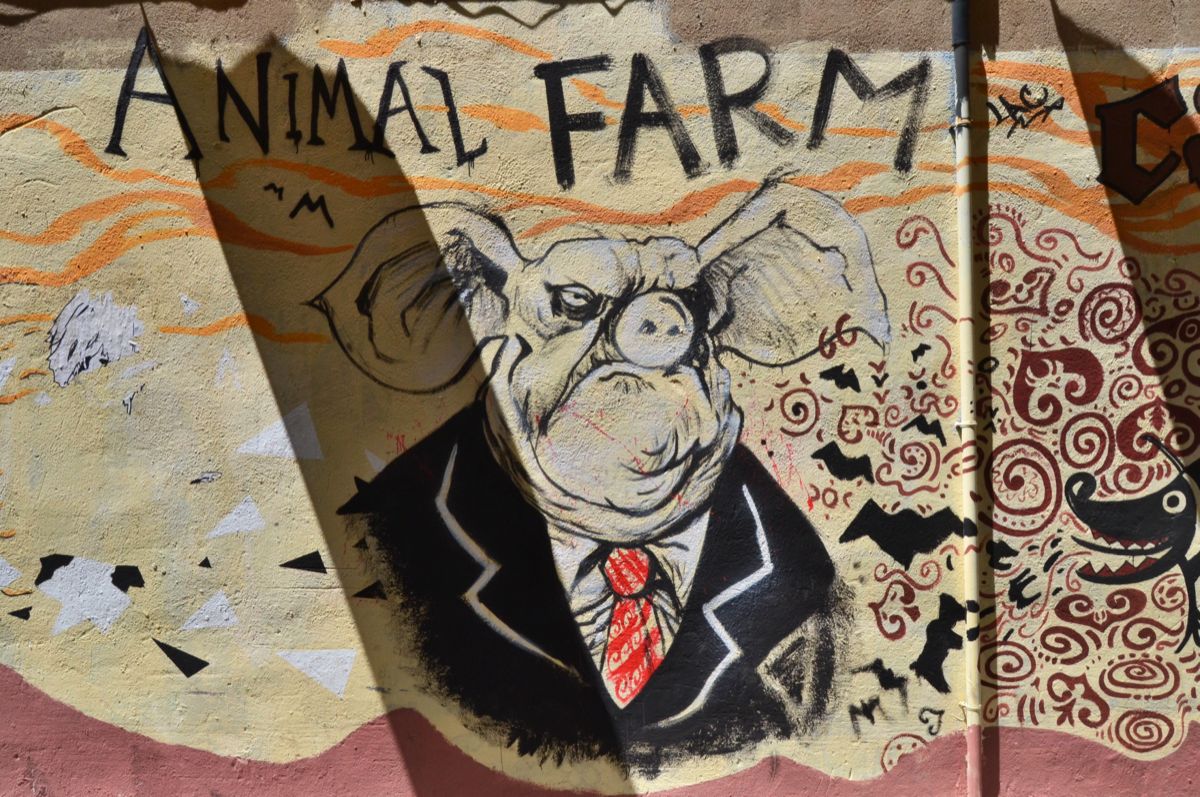
I read Animal Farm in 2017 and started this post the same year, then never finished it. Nearly nine years later, I have finally found the time.
Introduction
Animal Farm is one of the best books I read in 2017. George Orwell published it in 1945, and it remains one of his best known and most influential works. He is a brilliant satirist, and his writing is easy to find relatable. In 2008 The Times ranked him second on its list of “The 50 greatest British writers since 1945”.
The sentences are short and plain, and that plainness is doing real work. The book never tells you what to feel about the farm. It reports what happens, calmly, until the reporting itself becomes the argument. It runs to fewer than 100 pages and I finished it in two sittings.
Plot summary
A group of animals lives on a farm under the rule of its owner. One night Old Major, an old pig, calls everyone to a meeting. He explains what freedom would mean and points out that the animals of that farm choose neither their work nor their food. He urges them to rebel, and names humans as the enemy. Old Major dies a few nights later, and that lecture becomes his last words. The animals unite against their master and succeed in driving him off his own farm.
One group of pigs declares itself the educated class and asks to be allowed to make every decision for the farm. Under the leadership of two pigs the animals are happy, because for the first time they are working for fellow animals rather than for people. The owner returns with a group of men to take revenge, and it is a pleasure to read how the animals fight them off. They win the battle, and afterwards they add an amendment declaring humans their greatest enemy.
The story takes many tragic turns from there. The pigs in leadership spend their effort on making their own lives more comfortable and pay no attention to anyone else. Because they read better than the rest, they can describe growth that never happened to animals who are barely literate or not literate at all, and that imaginary growth is enough to keep the others believing. Meanwhile, a small dispute between the two leaders grows. Fearing for his control, one of them drives the other off the farm with a pack of dogs he has raised in secret. The democracy turns into a dictatorship.
The dictator announces that he will improve the farm, and convinces every animal to pour its effort into building a windmill — effort that used to go into growing the animals’ own food. A few more battles with humans follow, and they wreck the mill and break the animals’ morale. It is shocking to read how the leader sells off the best of the farm’s animals to fund his own comforts, until the independent farm depends on humans again and then goes bankrupt. The animals keep faith that whatever their captain decides is in their favour. The struggle drags on, and in the end the humans simply buy him, with a large bribe, to supply whatever the farm produces.
Closing thoughts
The book has left a deep impression on me. I am thankful to my guru Xitij Shukla, who encouraged me to read this book. Orwell’s writing impressed me so much that I bought another of his books, 1984.